Article by: Water Well Bob , email: waterwellbob@gmail.com
water Well Swage
stay informed
Swaging has
modernized
well repair
Many areas across our country, especially here out west, are seeing water levels in wells decline due to lack of recharge from droughts and too many wells draining down the water supply. The fact is a diminishing water supply requires pumping water up from deeper levels and this means wells fail faster than the thirty-plus years we expect from them. In the past when a well’s water yields slowed, and its casing begin to fail wells were taken out of service and a replacement well drilled. Today swaging can restore well casing to its original shape and condition, allowing wells to stay in production longer.
What is Swaging
Swaging is a cold forging process in which the dimensions of metal are altered using dies to produce a different shape. In the past well swaging was done by driving a hardened steel wedge through bent or mangled well casing – then a steel liner was driven through the damaged area.
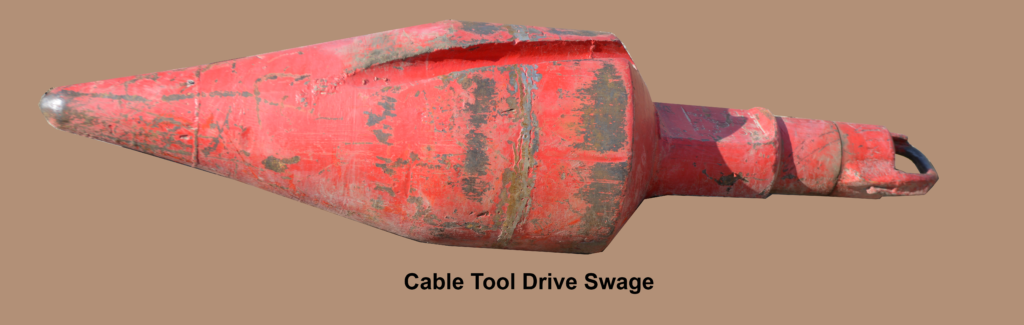
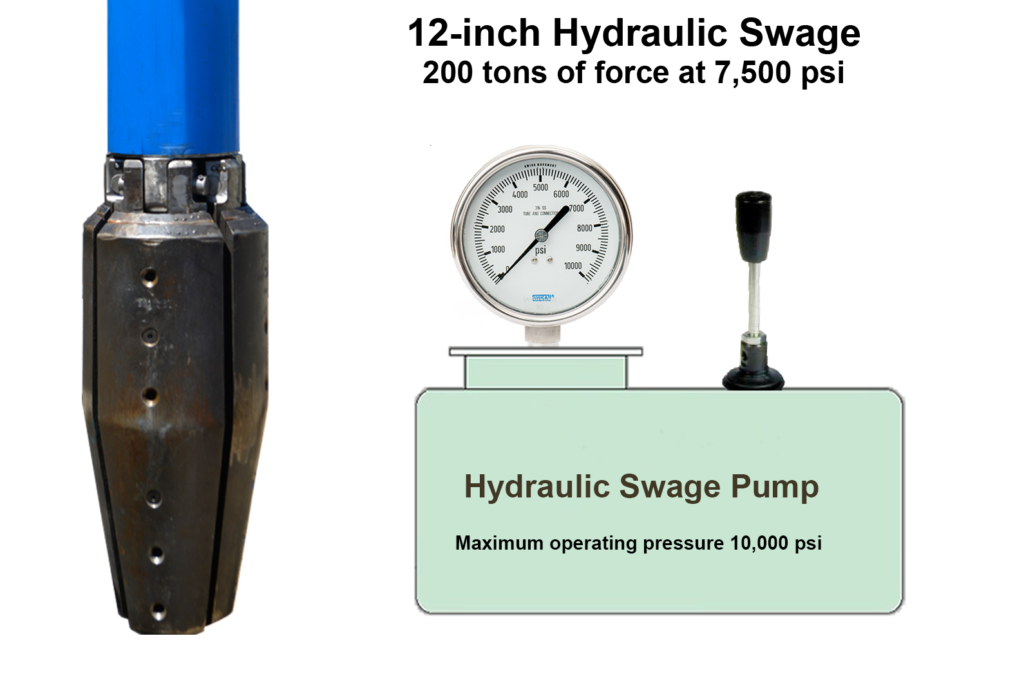
Today expandable swages are used to push casing back out to round – then a well patch is pushed out to seal or reinforce the area. Some well swaging is done using inflatable packers as swages. These are not true swages they don’t use hardened dies or have leverage to push out really tough steel and are mainly used to line well casing. The best swages use double acting hydraulic cylinders with motor, control, and all valves at the surface. This gives the operator complete control over up to two hundred tons of force to push out tough areas and forge in new steel.
“Swaging can get a well back in service quickly.”
Well Patching
Patching can get a well back in service quickly. It brings a well back to its intended size and strength, without having to change the pump size or setting. Well patches are corrugated rolled pipe that expands out to join together breached well casing. Watertight seals are made by matching the exact outside circumference of the patch to a well’s casing inside diameter or by adding rubber or neoprene to the patch.
Well Sleeving
Sleeving is done by pressing out round steel tubes or well patches against a well’s casing. This gives a well an inner jacket or sleeve of new steel. Care should be used with round tubing because stretching steel makes it thinner, weaker, and shorter. Well patches are often the better choice because they don’t stretch, they unfold making them stronger as they become round and attach to a well’s casing. Rubber backing is often used with stainless steel tubes or patches to prevent dissimilar metal contact. Welding tubes or patches together prevents water entry at connected joints and reduces the need to rubber back connected sections.
Well liners
Well liners are blank pipe, perforated pipe, sand screen or long filter attachments used as a new inner casing. Well liners work independently from the well’s casing, and this makes them stand-alone pipe and as such should conform to water well standards for length, diameter, and depth. The consideration in installing a well liner is that it reduces a well’s internal diameter; often a pump will need to be downsized and water volume adjusted to keep the liner from plugging. The best recommendation for well liners is make them as short as possible and swage in a sealing boot at the top or bottom.
Fishing and Other Uses
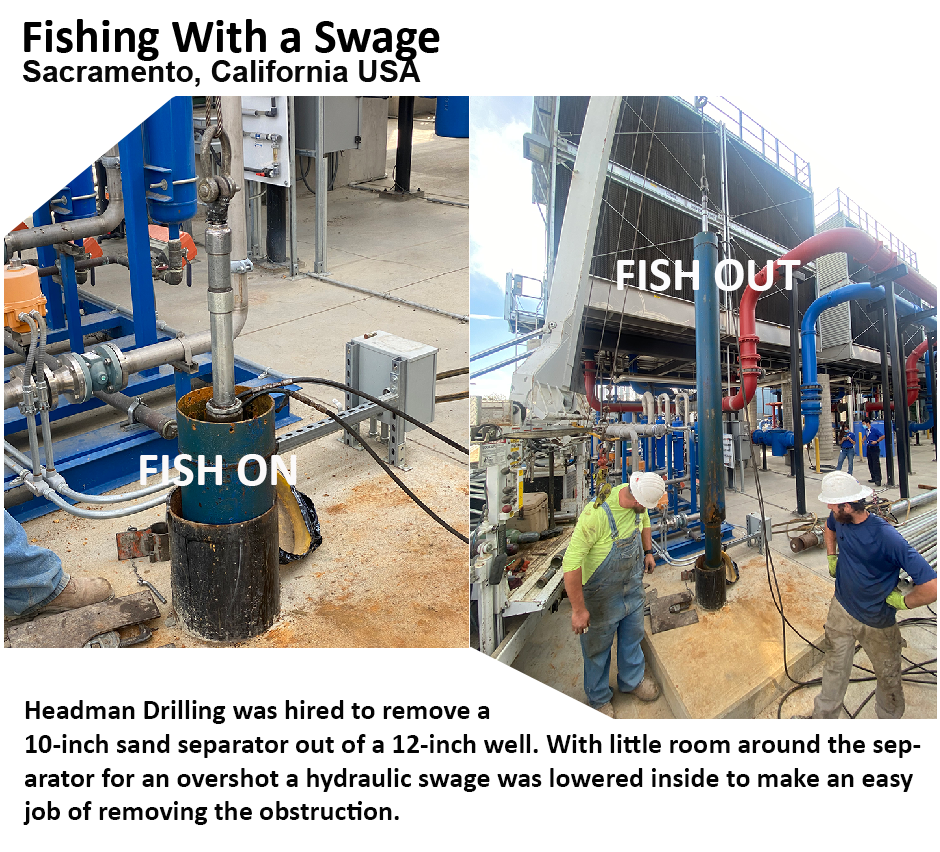
A double acting hydraulic swage can be used as a liner hanger or fishing spear. The swage can latch on to pipe, pump column, tail pipe, or sand separator and lift it from the well. It can also be used to lower a liner or sand screen down a crooked well in small sections, making them easier to install. Traditional fishing spears and liner hangers need to be the perfect size to grab onto something and are difficult to release. A hydraulic swage opens up and builds pressure against the object to be lifted or lowered. It is the equivalent of welding a liner, sand screen or fish to the swage and being able to easily release it when wanted.
Swage in action


The most often asked questions about swaging are:
The difference between patches, sleeves, and liners.
Well patches are folded or bent pipe made to open up and sleeves are smaller pipe that is stretched out, they are both made to fit tight and join against the well’s existing casing. Patches and sleeves are designed to restore a small area of the casing to its intended condition and should be considered well maintenance. The “rule of thumb for patch and sleeves thickness and strength” is it takes the same amount of pressure to collapse a patch in as it does to push it out. Well liners are stand-alone pipe and work independently of the wells existing casing and as such is considered new construction in an existing well. The “rule of thumb for liners is they should follow well standards set for pipe thickness and water open entrance area guidelines for pumping volume.
I have a hole or break in my well; it’s not pumping sand. Do I need to fix it?
The answer is you should. A breach in the casing keeps growing and can cause a well to fail at any time without warning. This usually happens when the well is struggling to make water when you need it the most.
Won’t bad water or sand find it way around a well patch?
The answer is no. Water flows into a well horizontally from an aquifer, and just like blank casing keeps brackish water out, a casing patch stops flow from that zone. Contaminates can migrate up or down a gravel or filter pack. If this is the case a patch – along with pressure grouting – can seal off the migrating contaminants.
Can PVC wells be patched?
The answer is yes, any type of well casing can be repaired by a skilled swage operator. Well casings smaller than 6 inch are not good candidates because the patch reduces well size, and a pump can’t be placed inside the well.
What is the difference between a hydraulic swage and a swage packer?
The answer is leverage. The best hydraulic swages can develop 10,000 psi and that is multiplied by the number of square inches of the piston inside the swage cylinder. Packers don’t use a piston and therefore don’t have leverage. Hydraulic swages can develop up to 200 tons of force whereas the best packers develop about 1 1/2 tons.
Is hydraulic oil safe to use?
The answer is yes, but care should be taken. Some swages still dump water or fluid into a well to release pressure. Today the best swages use hydraulic double acting cylinders; this means they are closed systems, and when ran the oil moves up and down inside hydraulic lines. Hydraulic lines are made with braided stainless steel and are very strong. Hydraulic oil is not considered very hazardous and floats on water just like the oil used in a turbine pump. If a line were to break, the spill is minimal and can be easily cleaned up by using a skimmer pump or oil bailer.